
Permanent Makeup Healing Process — What to Expect | Acworth, GA
A science-based guide to powder brow and nano brow healing, pigment changes, and aftercare
Healing isn’t a straight line, and it’s never instant. It’s a biological process that unfolds quietly over time, shaped by your skin, guided by your immune system, and influenced by the way you live day to day. Nothing about it is rushed, and nothing about it is random.
When you understand what’s happening beneath the surface, fear softens. Confusion fades. Expectations settle into something much more realistic and far more peaceful. This guide is here to walk you through the healing process with honesty and clarity, so you can feel informed, supported, and confident as your skin does the work it’s designed to do.
Immediately After Your Procedure: Why Brows Look So Dark at First?

The way your brows look immediately after your appointment is heavily influenced by the technique used. For example, powder brows are typically bolder on day 0 compared to nano brows, simply because of how the pigment is implanted and distributed in the skin.
Right after your appointment, brows almost always appear darker, sharper, and more intense than expected. This can feel alarming, especially if you were envisioning a soft, healed result right away.
Here’s what’s actually happening in this moment:
• Pigment is sitting high in the skin
• The area is mildly inflamed from the procedure
• Skin regeneration has not started yet
At this stage, what you’re seeing is fresh pigment combined with temporary swelling, not your final color. This is a normal and expected phase of the healing process, and it will change as your skin begins to repair and renew itself.

How Brow Color Changes During Healing?

The first two weeks after a micropigmentation appointment can feel like a bit of a rollercoaster. One day your brows look bold and confident, the next they seem to soften, fade, or even disappear altogether. It can feel unpredictable, sometimes dramatic, and occasionally a little unsettling.
But here’s the comforting truth: once you understand what’s happening beneath the surface of the skin, most of that anxiety melts away.
Brow healing follows a very predictable biological pattern, even though the exact timing can vary slightly from person to person. Skin is living tissue, and it responds in phases. What you’re seeing on the surface is simply your body doing exactly what it’s designed to do.
During the first 14 days, you can expect a few distinct visual stages:
An initial darkening phase
A shedding or flaking phase
A faded or patchy phase
A gradual return of color as the skin stabilizes
This is where I always want to pause and reassure you: the pigment does not disappear. It hasn’t fallen out, been rejected, or “not taken.” What’s happening is that fresh, new skin is forming over the pigment, temporarily softening how much color you can see.
This stage is often referred to as the ghosting phase, and it’s by far the most common moment when clients start to worry unnecessarily.
I like to explain ghosting with a childhood analogy most of us understand instinctively.
Think about scraping your knee as a kid. On the first day, it’s red, swollen, and angry. Over the next few days, a scab forms and darkens as the top layer of skin separates and protects what’s healing underneath. When that scab finally falls off, the skin beneath looks surprisingly pale compared to the surrounding area.
That lighter appearance doesn’t mean healing is complete. It means collagen is actively rebuilding, and new skin hasn’t finished maturing yet. True healing continues well after the scab is gone.
Brows heal the same way.
When flaking finishes, the epidermis has closed, but the deeper layers of skin are still reorganizing. Collagen is forming, inflammation is resolving, and pigment is settling into its final position. During this time, color can look muted or uneven before it gradually resurfaces.
Healing isn’t finished the moment the flakes fall off. It’s a process, not a single event. And when you allow your skin the time it needs, the results become softer, more balanced, and far more natural-looking.
That patience is part of what makes beautiful permanent makeup possible.
What’s Happening Inside the Skin?

When we talk about healing, it helps to zoom out and look at how skin actually works.
Your skin has two primary layers that matter in permanent makeup: the epidermis on top and the dermis underneath. The epidermis is your skin’s protective layer. It’s constantly renewing itself, shedding and replacing cells on roughly a 21-day cycle. That layer is designed to come and go.
The dermis, on the other hand, is more stable. It doesn’t shed in the same way, and that’s exactly why permanent makeup pigment needs to live there.
In professional micropigmentation, pigment is implanted into the upper papillary dermis, just beneath the epidermal–dermal junction. This depth is intentional. It’s deep enough to remain in the skin longer than the epidermis’ renewal cycle, but superficial enough to heal cleanly and softly over time.
That said, skin is not a perfectly flat surface. During implantation, a small amount of pigment will naturally sit within the epidermal layer as well. And because the epidermis is programmed to shed, that pigment is temporary by design.
This is what we mean when we say brows will fade by about 30 to 40 percent. That fading isn’t failure. It’s biology. You’re simply losing the pigment that was sitting in the layer of skin that was never meant to hold it long-term.
While the pigment itself is placed in the upper dermis, healing happens from the inside out. As your skin repairs itself, it pushes older epidermal cells upward, sheds dead tissue, and releases any pigment trapped there along the way.
During this process:
The epidermis renews itself
Excess pigment is naturally shed
The remaining pigment settles deeper and begins to stabilize
Your immune system is part of this equation too. Everyone’s body responds slightly differently to implanted pigment. Some immune systems encapsulate pigment gently and retain it well. Others are more efficient at clearing foreign particles. That’s why no two people heal identically, even when treated by the same artist using the same technique.
This isn’t something to fight or fear. It’s simply your body doing its job.
Understanding this biology is what turns the healing process from something stressful into something predictable. When you know what your skin is doing and why, the changes you see along the way start to make sense. And that understanding is what allows truly beautiful results to emerge with time.
The Brow Healing Timeline, Explained

Rather than labeling healing as “good” or “bad,” I always encourage thinking of it as a series of stages. Each phase has a purpose, even when it feels confusing or unexpected in the moment.
Day 0 – Freshly Done
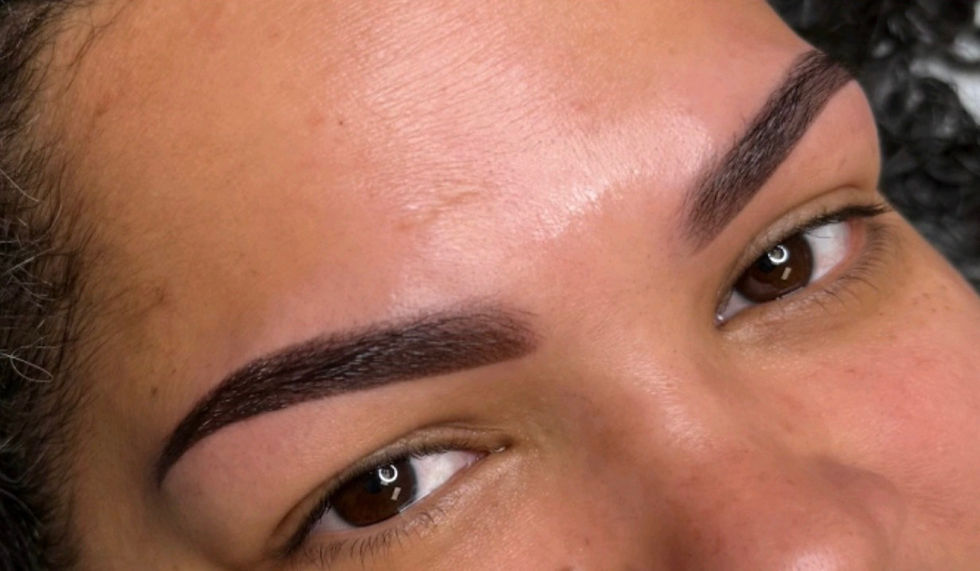
Right after your appointment, brows look bold, crisp, and very defined. This is the moment of maximum contrast. The pigment is fresh, the skin is slightly swollen, and everything appears sharper than it will long term. It’s striking, but temporary.
Days 1–3 – Dark & Stiff
Over the next few days, brows often appear darker and a bit duller in tone. The skin feels tight as it begins closing and repairing itself. This phase can feel uncomfortable visually, but it’s a normal response to fresh micropigmentation.
Days 4–6 – Scabbing & Flaking
As healing continues, the skin starts to shed. Light scabbing or flaking is expected here. What matters most during this phase is restraint. Picking or forcing flakes off disrupts the skin’s natural repair process and can compromise both skin integrity and pigment retention.
Days 7–14 – Faded & Patchy
This is the stage that causes the most concern. Brows may look uneven, lighter than expected, or patchy in places. This does not mean the pigment is gone, and it certainly doesn’t mean the work was done poorly. New skin has formed over the pigment, temporarily softening how much color you can see.
Beyond Day 15 – Healed Results Begin to Appear
Once the skin has fully closed and calmed, color begins to resurface more evenly. This is when the true healed result starts to reveal itself and when thoughtful decisions about refinement or touch-ups can be made.
Healing isn’t linear, and it’s not meant to be rushed. When you allow each stage to unfold naturally, the final result is softer, more balanced, and far more natural than what you see in those first few days.
Aftercare Essentials: Supporting the Skin, Not Smothering It

Good aftercare is actually very simple. The hard part isn’t the routine itself, it’s understanding why it matters.
As your artist, my role is to prepare your skin, choose the right technique, work at the correct depth, and select pigment that suits you. That part happens in the studio. Once you leave, healing becomes a shared responsibility, and this is where aftercare truly comes into play.
Permanent makeup doesn’t heal in isolation. How your skin repairs itself over the next two weeks has a direct impact on pigment retention, clarity, and longevity. Ignoring aftercare doesn’t just slow healing, it can drastically change the final result.
Aftercare isn’t generic, and it’s not one size fits all. I tailor it to your skin type, the technique performed, and the pigment used. That’s why following your specific instructions matters so much. It’s part of what you’re investing in when you choose professional permanent makeup.
The goal during healing is simple:
protect the skin while it does the work it’s designed to do, and create the most stable environment possible for pigment to settle and remain.
What that looks like in practice is gentle and intentional, not aggressive.
Focus on:
Cleansing softly and keeping the area clean without over-washing
Applying only a thin layer of aftercare to support comfort, not suffocate the skin
Using clean hands and touching the area as little as possible
Healing skin knows exactly what to do.
When aftercare is followed correctly, the skin heals calmly, pigment retention is more predictable, and the final result reflects the quality of the work that was done.
What to Avoid During the First 14 Days
There are certain things that can interfere with pigment retention and the healing process, even when they seem harmless or part of your normal routine. Most of these come down to heat, moisture, friction, and chemistry, all of which influence how skin behaves while it’s repairing itself.
During healing, it’s important to avoid anything that overstimulates the skin or introduces unnecessary bacteria.
Hot showers, steam, and saunas are best skipped in the early phase. Heat increases blood flow and promotes sweating, which softens healing tissue and creates a more hospitable environment for bacteria. It’s simply not the moment your skin needs extra warmth or moisture.
Sun exposure and SPF on the brows should also be avoided. Healing skin is more sensitive to UV damage, and certain pigments can react unpredictably to sunlight before they’ve fully stabilized. On top of that, freshly treated skin is more prone to sunburn, which can disrupt both healing and color retention.
Makeup and skincare products don’t belong on the brow area during healing. Even clean brushes and familiar products can introduce bacteria, and many skincare ingredients are active by design. Acids, retinoids, and exfoliants can sensitize healing skin or interact with pigment in ways that aren’t visible until later.
Heavy sweating and intense workouts are another common culprit. Sweat contains sodium, and when it comes into contact with healing skin, it can create an osmotic effect that encourages pigment to migrate out of the skin rather than settle into it. In simple terms, sweat can literally pull color away while the skin is trying to hold onto it.
And finally, scabs need to be left alone. Picking at flaking skin doesn’t just remove surface tissue. It can pull away deeper layers of healing skin along with pigment that would otherwise have remained. This increases the risk of uneven results and, in some cases, scarring.
Heat, moisture, friction, and active ingredients all increase pigment loss during healing. When you minimize these factors, you’re giving your skin the calm, stable environment it needs to heal beautifully and retain the work that was done.

What’s Normal and What’s Not

Healing can feel a little strange at first, especially if you’ve never had permanent makeup before. Your skin just went through a controlled injury, so some new sensations are expected. New doesn’t mean bad. Most of what you’ll notice is simply your body doing exactly what it’s meant to do.
It’s very normal to see mild redness, feel some tenderness, notice light flaking, and even have a bit of clear lymph fluid during the first few days. That lymph can surprise people, but it’s actually part of your body’s natural healing response. Think of it as your immune system showing up to protect the area and help the skin rebuild as it closes.
All of this falls firmly into normal healing.
There are a few signs, though, that deserve closer attention.
If redness begins to spread instead of calm down, pain becomes throbbing or progressively worse, discharge turns yellow or green, or you experience symptoms like fever or chills, those are not typical healing signs. They can indicate that the skin is struggling or that an infection may be developing.
It’s important to say this clearly and kindly:
as a permanent makeup artist, I can guide you through normal healing, but I do not diagnose medical conditions. If symptoms feel systemic, intense, or concerning, a medical professional is the right person to evaluate what’s happening.
Here’s how I suggest thinking about it:
If something looks different than expected or you’re unsure whether a change is normal, reach out to me. I’m always happy to look, explain, and reassure.
If you’re experiencing increasing pain, spreading redness, unusual discharge, or signs of illness, contact a doctor promptly.
And one more perspective I always want my clients to keep in mind. During healing, you are not healing your permanent makeup. You are healing skin. The pigment settles as your body repairs itself. Supporting that process safely is what protects both your health and your final result.
If something doesn’t feel right, trust that instinct. You’re not overreacting by asking questions. Healing works best when you feel informed, supported, and know exactly where to turn when you need guidance.
Why Touch-Ups Are Part of the Process

Permanent makeup is designed to be built gradually, not forced in one session.
We are working with the largest organ in a human body - the skin - so working slowly and in stages is ideal. We can never fully predict regardelss of our training, if your skin will retain all of the pigment or retain non. There are too many factors at play and since it is something that will live front and center on your face for a longer while, caution is the best plan moving forward.
The process looks like this:
Initial session establishes shape and foundation, it is also an introduction to your new look. Being conservative during this session allows client’s to get used to their new look. Our brains need about 3 weeks to form new connection in our brains to recognize us for us again after a big change on the face occured so time is needed.
Healing reveals how your skin retained pigment
Touch-up refines color, density, and balance
Final healing stabilizes the long lasting result
Touch-ups are not corrections.
They are where precision happens.
Brows Shock is real!
Brows shock is very real, and it has nothing to do with whether your brows look “good” or “bad.” It has everything to do with how the brain processes change.
Our brains rely on familiar visual patterns to recognize ourselves. When a noticeable change happens on the face, especially in an area as expressive as the brows, the brain needs time to update that internal map. On average, it takes about two to three weeks for new neural connections to form and for your reflection to feel familiar again.
During that window, even beautifully done brows can feel “too much,” “not me,” or simply strange. That discomfort isn’t intuition or regret. It’s your nervous system recalibrating to a new visual reality. As healing progresses and the brain catches up, most people find that what once felt shocking gradually becomes normal, then natural, and eventually something they can’t imagine living without.

Real Healing Examples
Day 0 of healing:

Day 3 of healing:

Day 7 of healing:

These images show real clients at different healing stages. What looks bold early on softens into a natural, wearable result once healing is complete.
Final Thoughts
Permanent makeup is never a one-sided act. It’s a quiet collaboration between an artist’s experience and your skin’s biology. Once your appointment is complete, your body takes the lead, repairing, rebuilding, and settling pigment in its own time and rhythm. Healing isn’t instant, and it isn’t perfectly linear, but it is intentional.
When you understand what’s happening beneath the surface, the process becomes far less intimidating. Changes in color, texture, and intensity stop feeling alarming and start making sense. Patience, thoughtful aftercare, and respect for the skin’s natural healing cycle are what ultimately shape beautiful, long-lasting permanent makeup results.
If you’re healing from brow tattooing, nano brows, or powder brows and find yourself questioning what you’re seeing in the mirror, know that curiosity and concern are completely normal. Questions don’t mean something is wrong. They mean you’re paying attention, and education is part of proper permanent makeup care.
For my clients here in Acworth, Marietta, Kennesaw, Woodstock, and surrounding areas, support doesn’t end when you leave the studio. If something feels unclear during healing, or if you simply need reassurance that what you’re experiencing is normal, I always encourage you to reach out. Open communication is part of responsible, high-quality permanent makeup, not an afterthought.
Healing is part of the art. Understanding it is what allows you to enjoy the result fully.
If you’re considering permanent makeup or currently healing and want guidance grounded in both science and experience, I’m always happy to help. Sometimes a simple conversation is all it takes to turn uncertainty into confidence.
Schedule your consultation today:
Or call me directly:
Kasia Herdman 724-422-7109


Comments